
Geely’s European expansion is starting to look less like a series of experiments and more like a proper rollout.
The Chinese manufacturer has officially entered Austria, where it is launching with two electrified SUVs and, perhaps more importantly, an actual sales and service network.
The two cars are the fully electric Geely E5 and plug-in hybrid Starray EM-i. Seven dealer partners are operational from launch, with more locations planned. That last detail matters.
Selling a Chinese car in Europe is no longer particularly unusual. Convincing buyers that parts, servicing and warranty support will still be straightforward several years after they’ve handed over the money is a different challenge.
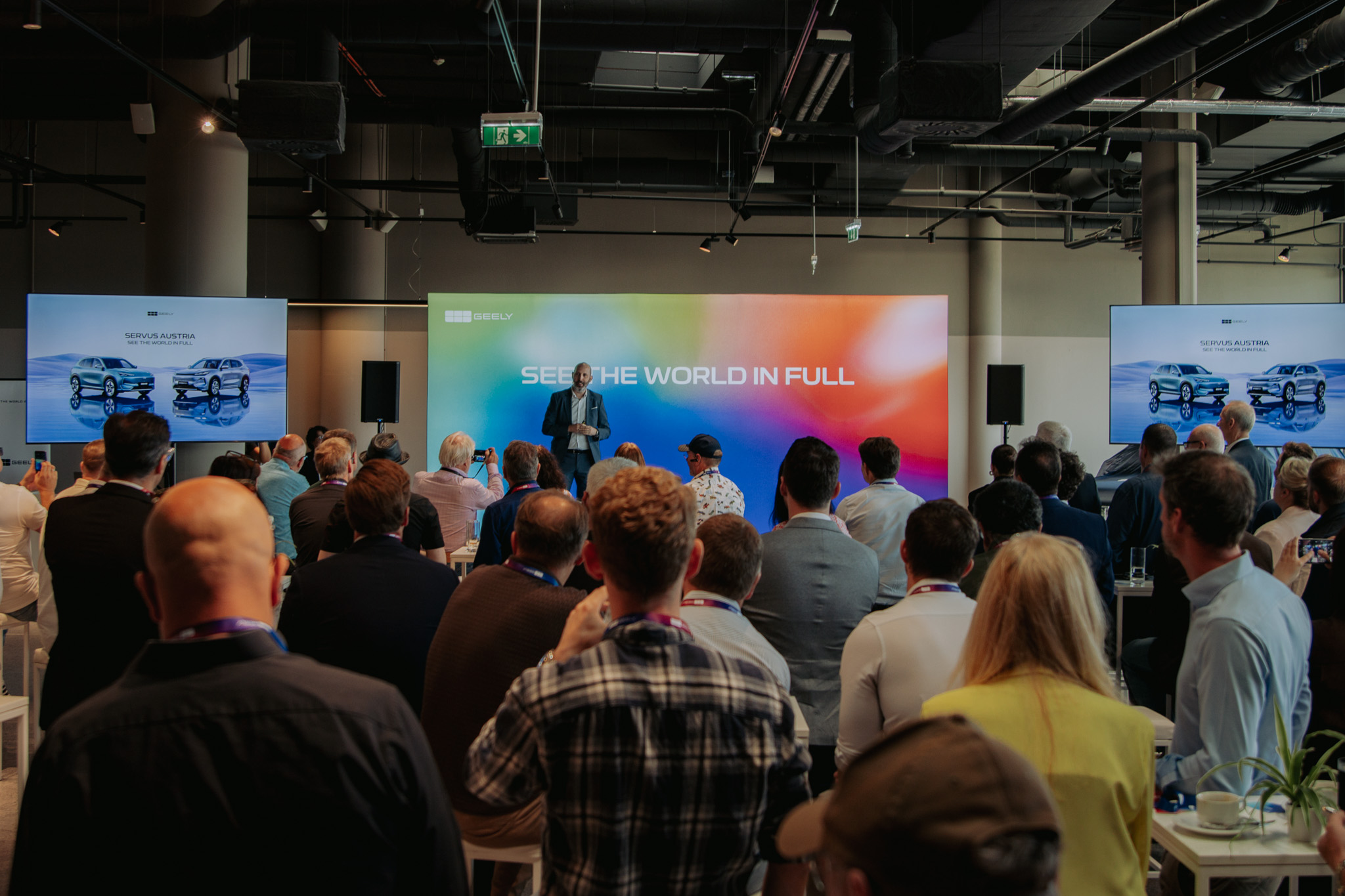
And Geely appears to understand that. Its Austrian operation is being established with AutoWallis, rather than relying entirely on online sales or a handful of flagship stores. Sales and aftersales support begin together.
Austria also isn’t an isolated market entry. Geely has been moving quickly across Europe, with the E5 and Starray EM-i already forming the core of its expansion in several countries.
The choice of those two vehicles is interesting because Geely isn’t betting everything on one type of electrification. The E5 is fully electric, while the Starray EM-i is a plug-in hybrid.
That gives customers who aren’t ready to depend entirely on public charging an alternative while allowing Geely to compete directly in the EV market at the same time.
It’s also increasingly clear why Europe matters so much to the company. This means that Geely Auto reported more than 1.42 million vehicle sales during the first half of 2026, while exports outside China reached approximately 474,000 units. That’s a 158 percent increase year over year.
The company subsequently raised its 2026 export target from 640,000 to 920,000 vehicles, with Europe going to have to contribute to that growth. But there’s another layer to the story.
Geely is no longer approaching Europe simply as a Chinese manufacturer shipping completed cars west. Its relationships with European manufacturers and industrial partners are becoming considerably deeper.
That includes the recently announced joint venture with Ford around the Valencia factory in Spain. Pending regulatory approval, Geely plans to manufacture two new-energy models there, with production expected to begin in 2028.
Austria therefore fits into a much larger strategy. First establish the products. Then build the dealer and service network. Eventually, manufacture more cars locally.
However, none of that guarantees Geely will become a major European brand. Buyers have more Chinese alternatives than ever, while established manufacturers are rapidly expanding their own electric and hybrid ranges.
But the days when Geely was largely invisible behind brands such as Volvo and Polestar are disappearing. In Austria, customers will now see the Geely name itself above the showroom door.
And seven dealers at launch suggests the company expects people to walk through it.