
Chinese manufacturers trying to establish themselves in Europe usually face the same problem. Selling cars is one thing; building a complete manufacturing operation on the continent is something else entirely.
Geely has found a considerably faster solution.
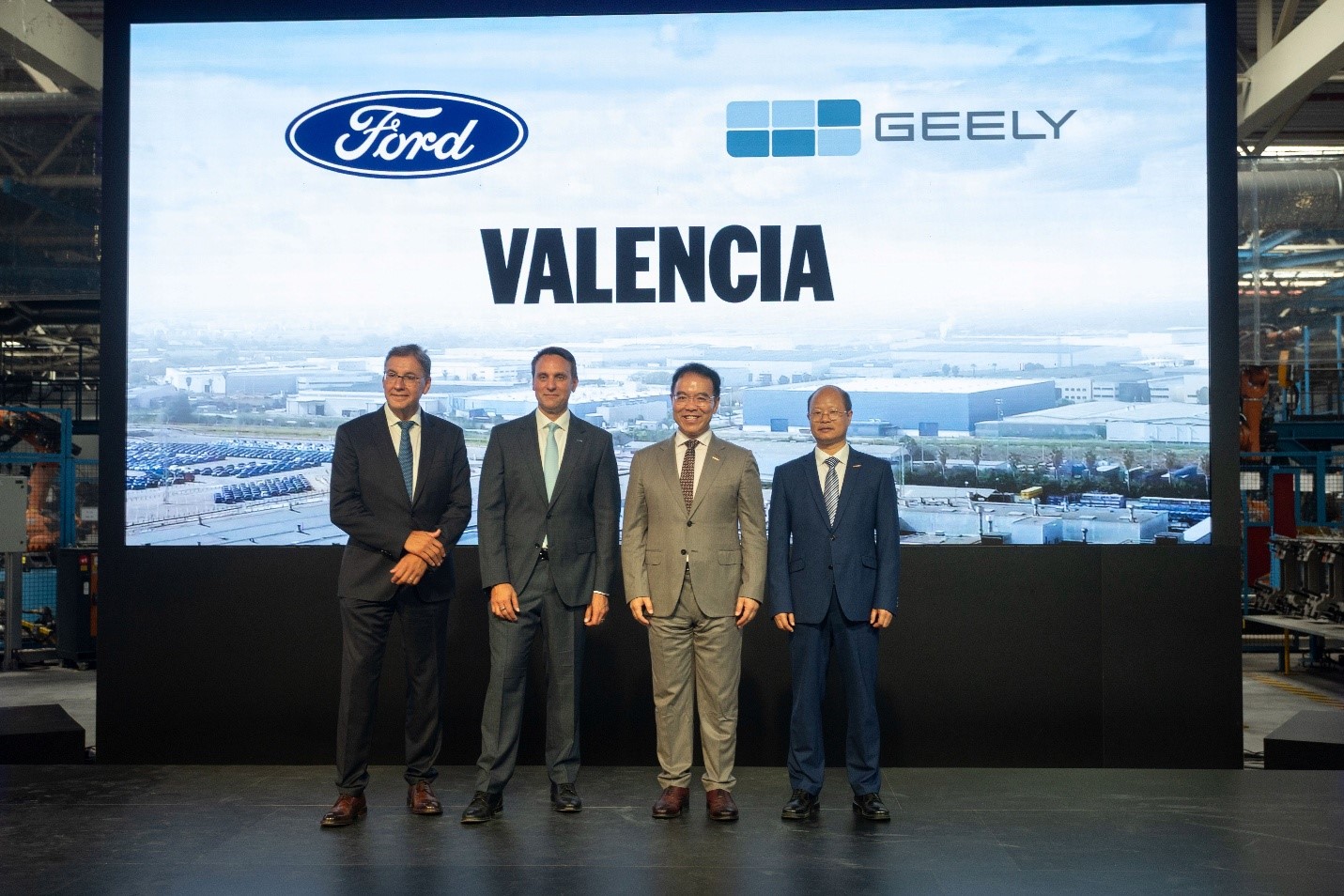
The Chinese company and Ford have agreed to establish a joint venture at Ford’s existing Valencia plant in Spain, where vehicles from both manufacturers will eventually be produced on the same industrial site. Subject to regulatory approval, the new company is expected to begin operating during the first half of 2027, with production of the first vehicles scheduled for 2028.
The ownership split is interesting. Ford will control 66 percent of the joint venture, while Geely will hold the remaining 34 percent.
More important, however, is what they plan to build.
The Valencia facility is expected to produce three new Ford-branded multi-energy vehicles and two electric Geely models, giving both manufacturers access to a plant capable of producing around 500,000 vehicles annually.
For Geely, the attraction is obvious.
Building cars locally removes some of the complications associated with importing vehicles from China, while placing production much closer to European customers. It also allows Geely to benefit from an established factory, workforce and supplier network rather than spending years constructing an entirely new operation from scratch.
Ford gets something useful in return.
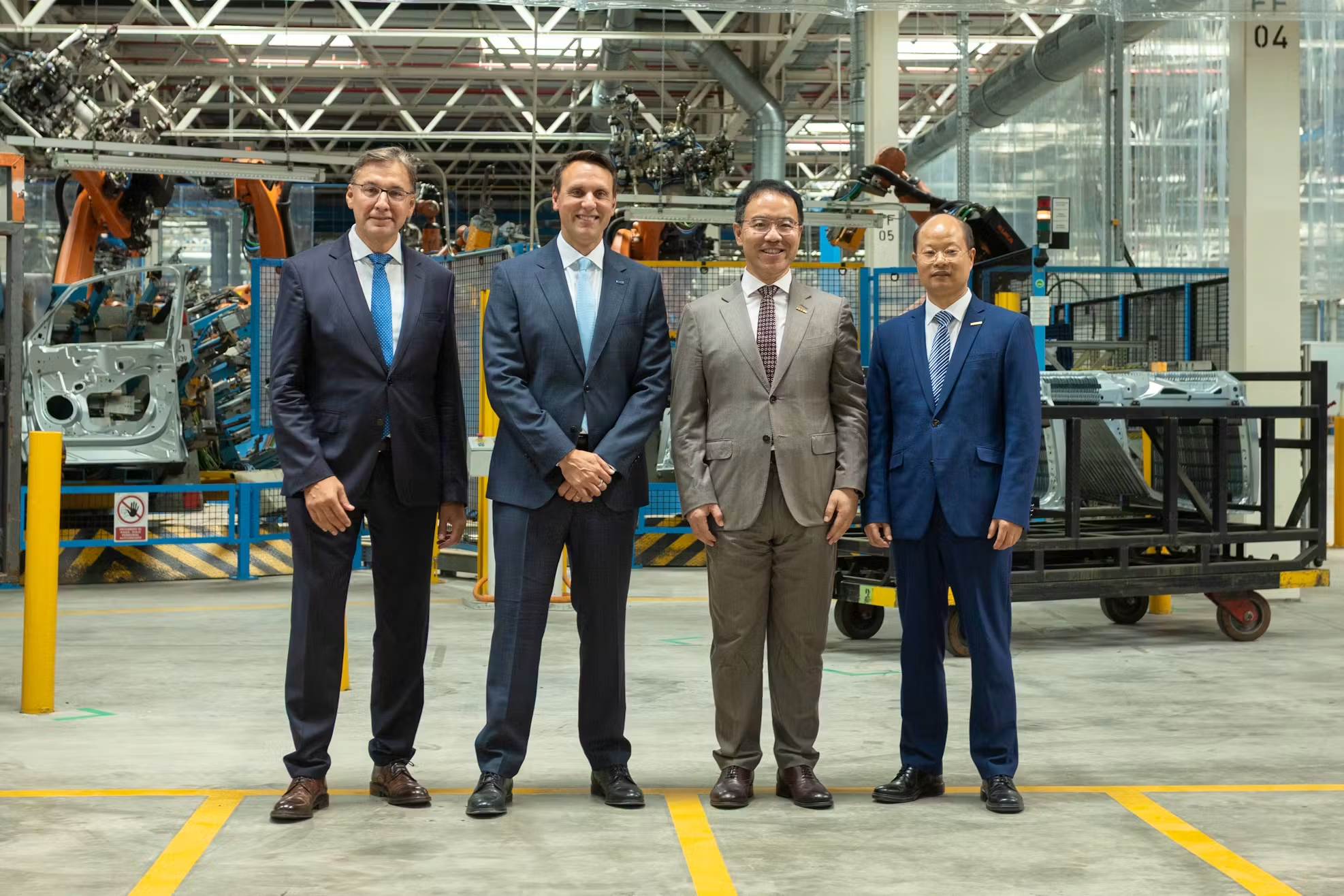
European factories are expensive when they aren’t operating near capacity, and sharing Valencia gives Ford another way to spread manufacturing costs while preparing a new generation of vehicles for a market where predicting the exact mix of petrol, hybrid and electric demand has become increasingly difficult.
There is also some history behind the partnership.
Ford sold Volvo Cars to Geely in 2010, a deal that looked unusual at the time but eventually helped transform Volvo into one of Geely Holding’s most important international brands. The two companies therefore aren’t complete strangers, even if building vehicles together takes that relationship considerably further.
Geely’s European ambitions have also changed dramatically since then.
The company reported more than 474,000 exports during the first half of 2026, an increase of 158 percent year over year, and subsequently raised its full-year export target from 640,000 to 920,000 vehicles. Its European strategy now includes not only Geely itself but Zeekr, Lynk & Co and several industrial partnerships.
Valencia therefore looks less like an isolated manufacturing deal and more like the next stage of that expansion.
For years, the discussion surrounding Chinese cars in Europe has focused largely on vehicles arriving from Chinese factories. Local production changes the equation.
A Geely designed for Europe and manufactured in Spain isn’t quite as easy to describe simply as a Chinese import. And by 2028, there could be quite a few of them.